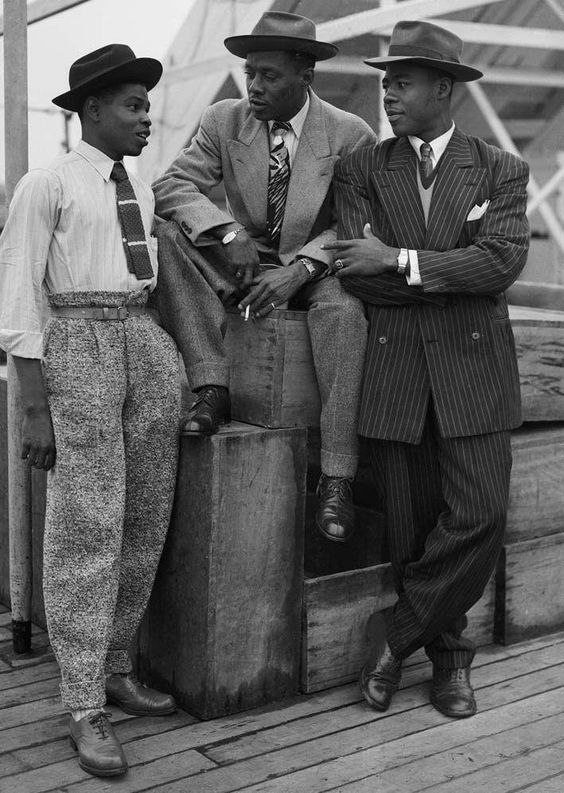
Cultural Appropriation vs. Appreciation
Cultural appropriation remains a well debated topic within the fashion industry - especially when it comes to African American cultural influences. Elements such as grillz, baggy clothing, sneakers, denim, and many beauty trends have deep roots in African American culture and their history. Yet these elements are often adopted by mainstream fashion without recognition of their ties to black communities. This widespread adoption raises important questions regarding, respect, ownership, and power dynamics within the fashion industry. Understanding these issues helps us to be better at fostering ethical cultural exchange in fashion.

Take a walk down almost any street and you’ll see it: baggy jeans, graphic tees, sneakers, low-rise cuts, layered jewelry. These pieces are everywhere. On runways, in luxury campaigns, on celebrities, and in suburban hallways. But before they were “cool,” before they were profitable, these styles meant something very different.
Many of today’s most celebrated fashion trends were born in Black communities. Streetwear, in particular, emerged as a form of rebellion, resilience, and self-expression in response to oppression, over-policing, and exclusion. Yet time and time again, these styles are adopted by mainstream fashion without acknowledgment, stripped of context, and resold at a premium. Often to audiences far removed from the culture that created them.
This raises an uncomfortable but necessary question: where is the line between cultural appreciation and cultural appropriation?
As a Black woman navigating fashion, both personally and academically, this conversation isn’t abstract to me. It’s lived. And it’s one the fashion industry continues to avoid confronting honestly.
History
Streetwear didn't come from fashion houses. It came from overlooked neighborhoods.
From hip-hop scenes to basketball courts in the Bronx, African Americans shaped the foundational elements of what we now call streetwear. Brands and designers such as Willi Smith, Spike Lee, April Walker, and Baby Phat spoke directly to Black identity, pride, and resilience. These early streetwear movements dating back to the rise of hip-hop from the 1980s to the early 2000s were more than just fashion; they were a response to oppression, police profiling, marginalization, and systematic exclusion from the fashion industry.
Streetwear in the 80s through early 2000s wasn’t about trends. It was about visibility. Oversized silhouettes, bold colors, sneakers, grillz, and layered jewelry reflected a culture pushing back against systems that constantly tried to shrink it.
As April Walker has described, streetwear was about remixing, bleaching jeans, altering garments, creating something new from what you had. It was storytelling. And that history matters. When luxury brands replicate the aesthetic without the culture, what’s left is a shell - a look without a backbone.
So... Appreciation or Appropriation?
Cultural exchange isn’t new. But intent doesn’t erase impact.
In my own life, I tend to avoid wearing garments from cultures that aren’t mine - not because they aren’t beautiful, but because many pieces carry deep meaning that deserves respect. Appreciation, to me, starts with knowledge, humility, and acknowledgment. Without those things, borrowing becomes erasure.
That perspective came up again and again when I spoke to friends and classmates about cultural appropriation in fashion.
One interviewee put it simply:
“If someone is invited into a space and asked to wear something in a way that honors that culture, that can be respectful. But when it’s just for profit or aesthetics, that’s when it becomes appropriation.”
Across racial backgrounds, participants consistently described appropriation as stealing, misrepresentation, or disrespect. Regardless of personal style or identity, there was a shared understanding that cultural appropriation is both harmful and unethical.
Power Changes Everything
One of the biggest factors in this conversation is power.
When dominant groups adopt styles from marginalized cultures, they’re often praised as edgy, fashionable, or innovative. When the original community wears those same styles, they’re labeled unprofessional, ghetto, or inappropriate. That imbalance is the problem.
In fashion, power determines who gets credit, who gets paid, and who gets erased. Celebrities like the Kardashians, Miley Cyrus, and many other global pop artist and celebrities have repeatedly adopted Black aesthetics - hairstyles, language, and silhouettes. Only to discard them once the trend cycle moves on or their social standing loses influence.
Meanwhile, Black communities are left with:
Styles that are no longer respected
Cultural meaning that’s been diluted
And no financial benefit from the trend they created
As one interviewee said:
“It feels like a lost art.”
Streetwear was once about individuality. Now that it’s everywhere, it ironically does the opposite, and the culture that created it rarely benefits.
When Brands Get Involved
Celebrities may be the face of appropriation, but brands are the system behind it. Luxury houses once dismissed streetwear as “thug” or “urban.” Now, it’s their biggest revenue driver.
Take Louis Vuitton as an example. For decades, the brand represented elite European luxury, trunks, tailoring, and exclusivity. It wasn’t until Black creatives like Virgil Abloh and later Pharrell Williams stepped into leadership roles that the brand suddenly embraced oversized silhouettes, graphics, and streetwear aesthetics.
The shift wasn’t accidental. It followed decades of Black cultural influence - from hip-hop to Tommy Hilfiger in the 90s - finally becoming impossible to ignore.
But as one interviewee noted:
“They see streetwear as a market they can exploit. They don’t want to give credit because they’re afraid you’ll become bigger than them.”
Brands take what they want, profit from it, and then return to whiteness when it’s no longer trendy. The culture remains, but the respect doesn’t.
Commodification has Consequences
When culture becomes a costume, meaning disappears.
Non-Black consumers can put on durags, grillz, Jordans, and baggy jeans while it’s “in,” then discard them when trends shift. Black communities don’t get that option. The same items return to being stigmatized, but now without their original context or respect. Even worse, the profits rarely go back to the originators. While corporations make millions off Black creativity, Black designers and communities are left watching their ideas be rebranded, resold, and rewritten without equity or acknowledgment.
That’s not appreciation, that’s exploitation.
Respectful Engagement
When I asked interviewees what respectful engagement with cultural fashion looks like, their answers were consistent:
Learn the history
Acknowledge where styles come from
Credit Black creators
Don’t mock, exaggerate, or perform Blackness
Don’t strip styles of their meaning
Don’t profit without giving back
Respect isn’t about copying perfectly, it’s about understanding why something exists and honoring the people behind it.
As one participant said:
“If you really appreciate Black culture, you won’t try to act Black. You’ll know the history, understand the meaning, and engage with it honestly.”
Final Thoughts
Cultural appropriation in fashion isn’t just about clothes. It’s about history, power, and who gets to win.
When Black creativity is consistently borrowed, rebranded, and celebrated on non-Black bodies, while Black communities remain marginalized, fashion stops being self-expression and starts being exploitation.
The solution isn’t gatekeeping culture. It’s respect, education, and accountability. If fashion wants to move forward ethically, designers, brands, celebrities, and consumers alike must stop treating culture as a trend and start treating it as human. Because behind every garment is a story, and those stories deserve to be embraced, not erased.